Beyond the Buildings: How Thoughtfully Designed Communities Can Improve Everyday Living
Introduction
When searching for a home, prospective buyers often begin with familiar considerations: price, location, number of bedrooms, finishing, and proximity to work or school.
These factors matter, but they do not tell the whole story.
A home exists within a wider environment, and that environment can significantly influence everyday life. The condition of shared spaces, the management of common facilities, access to essential services, opportunities for social interaction, and the general organisation of a residential neighbourhood can all affect the experience of living there.
This is why the future of residential development should not be measured solely by the number of buildings constructed. It should also be measured by how effectively those buildings support the people who live in them.
For developers, investors, and prospective homeowners in Nigeria, understanding the difference between a collection of houses and a thoughtfully designed community is becoming increasingly important.
1. A Good Community Begins with Thoughtful Planning
Successful residential communities are planned around how people will use the environment, not just where buildings can fit.
This means considering the relationship between homes, roads, pedestrian routes, parking, drainage, shared facilities, and open spaces from the earliest stages of development.
Poor planning can create avoidable problems. Narrow or obstructed access routes, inadequate drainage, poorly positioned facilities, and insufficient shared spaces may affect convenience and the long-term usability of an estate.
Thoughtful planning aims to balance residential density with accessibility, safety, privacy, and comfort.
In growing Nigerian cities, where traffic congestion and pressure on infrastructure can influence everyday routines, these considerations are especially relevant.
A well-planned estate should make it easier for residents to move around, access essential facilities, and enjoy their homes without unnecessary inconvenience.
2. Shared Spaces Can Bring People Together
A residential community is more than a collection of private homes. It is also an environment where people may interact, build relationships, and develop a sense of belonging.
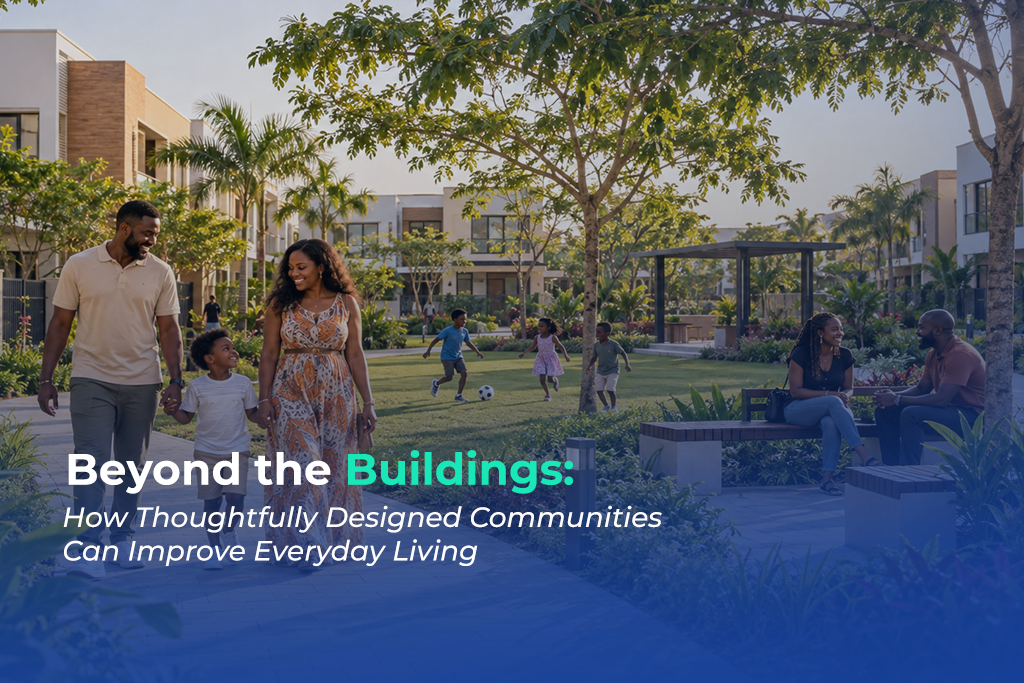
Shared spaces such as gardens, walking paths, playgrounds, seating areas, and multipurpose recreational spaces can create opportunities for residents to connect.
For families, these spaces may provide areas for children to play under appropriate supervision. For older residents, accessible seating and walking routes may make outdoor activity more comfortable. For other residents, shared spaces can provide opportunities to relax without leaving the estate.
These facilities do not always need to be elaborate or expensive. Their value depends on whether they are appropriate for the residents, properly located, accessible, and consistently maintained.
The objective is to create an environment where residents can enjoy more than the interior of their homes.
3. Safety Should Be Supported by Design and Management
Security is an important consideration for many Nigerian homebuyers. However, a safe residential environment depends on more than installing a gate or employing security personnel.
Estate design and management can also contribute to residents’ sense of security.
Clearly defined entrances, appropriate lighting, well-maintained access routes, visible common areas, and organised visitor procedures can support effective security arrangements.
At the same time, security measures should respect residents’ privacy and provide reasonable access for visitors, deliveries, and emergency services.
A community also needs clear procedures for reporting concerns, maintaining equipment, managing access, and responding to incidents.
When security arrangements are supported by thoughtful design and consistent management, they can contribute to a more orderly and reassuring living environment.
4. Infrastructure Determines How Well a Community Functions
A beautifully designed home can become difficult to enjoy if the surrounding infrastructure is unreliable.
Roads, drainage, water supply, electricity, waste management, and telecommunications all influence how effectively a residential community functions.
For example, inadequate drainage can create difficulties during heavy rainfall. Poorly maintained roads can affect movement, while unreliable utility arrangements may increase household expenses.
These issues highlight why infrastructure should be considered an essential part of residential development rather than an afterthought.
Developers need to consider the infrastructure required to support the intended community, while residents should understand which services are provided, how they are maintained, and who is responsible for them.
For prospective buyers, it is useful to look beyond the appearance of completed buildings and ask practical questions about the systems that make everyday living possible.
5. Effective Estate Management Protects the Resident Experience
Even a well-designed community can deteriorate without consistent management.
Common areas require maintenance. Security arrangements need oversight. Waste must be collected, drainage systems inspected, and shared facilities repaired when necessary.
Estate management also involves communication, financial accountability, and clear procedures for addressing residents’ concerns.
Buyers should therefore consider how an estate will be managed after construction and occupation.
Important questions include:
- Who is responsible for maintaining shared facilities?
- How are service charges calculated and communicated?
- What procedures exist for reporting maintenance issues?
- How are residents informed about repairs and planned improvements?
- What rules govern the use of common areas?
- How are disputes and complaints handled?
Transparent management can help residents understand their responsibilities and how shared resources are being used.
It can also support the long-term upkeep of the development, although outcomes depend on the quality of implementation and the resources available.
6. Sustainability Is About Practical, Long-Term Choices
Sustainable residential development does not necessarily mean building expensive, technology-heavy homes.
It can begin with practical decisions that reduce waste, improve efficiency, and make the community more resilient over time.
Examples include appropriate landscaping, efficient lighting in shared areas, water-conscious design, responsible waste management, and drainage systems suited to local conditions.
In locations vulnerable to flooding, site assessment, drainage planning, and appropriate construction standards are particularly important.
Where feasible, developers may also consider renewable energy solutions, energy-efficient fittings, and designs that make good use of natural light and ventilation.
These measures should be evaluated in relation to local conditions, maintenance requirements, and the long-term needs of residents.
The goal is to create communities that remain functional and comfortable while managing resources responsibly.
7. Accessibility and Convenience Improve Everyday Life
A residential community should serve people with different needs and stages of life.
Pedestrian routes, ramps where appropriate, accessible entrances, adequate lighting, and convenient access to essential facilities can make an estate easier to use.
The wider neighbourhood matters too. Proximity to schools, healthcare facilities, shopping areas, workplaces, and public transport can influence how residents spend their time and manage daily responsibilities.
Not every development can provide all these facilities within its boundaries. Nevertheless, developers and buyers can assess how the estate connects to the surrounding area.
Convenience is not simply about having more amenities. It is about whether residents can realistically access the services and facilities that matter to them.
8. Resident Engagement Helps Build a Stronger Community
A well-functioning community requires cooperation between management and residents.
Clear communication, fair rules, timely responses to complaints, and opportunities for residents to share feedback can help create a more positive living environment.
Resident engagement may involve community meetings, maintenance updates, neighbourhood activities, or accessible channels for reporting concerns.
The approach should be inclusive and practical, recognising that residents have different schedules, priorities, and expectations.
When people understand how decisions are made and how they can contribute, it becomes easier to establish shared expectations about maintaining the environment.
A sense of community cannot be created through architecture alone. It develops through the ongoing relationship between the physical environment, the people who use it, and the systems that support it.
Conclusion
The quality of a residential development should be measured by more than its buildings, finishes, or initial selling price.
Thoughtful planning, dependable infrastructure, effective management, accessible shared spaces, appropriate security, and meaningful resident engagement all contribute to the everyday experience of living in a community.
For prospective homeowners, these factors offer a useful framework for evaluating where to live. For developers, they provide an opportunity to create residential environments that respond to people’s needs beyond the point of purchase.
As Nigeria’s cities continue to grow, the long-term value of residential development will depend not only on how many homes are built but also on how well those homes and their surrounding environments serve the people who live in them.
At Octo5 Holdings, we recognise the importance of looking beyond individual properties to consider the broader residential experience. Building a home is an important milestone; creating an environment where people can live comfortably and confidently is an equally important part of the journey.
Looking for a home that fits your lifestyle? Consider the quality of the wider community, the infrastructure supporting it, and the management arrangements that will shape your experience long after you move in.