Renting vs Buying in Nigeria: Which Option Makes More Financial Sense?
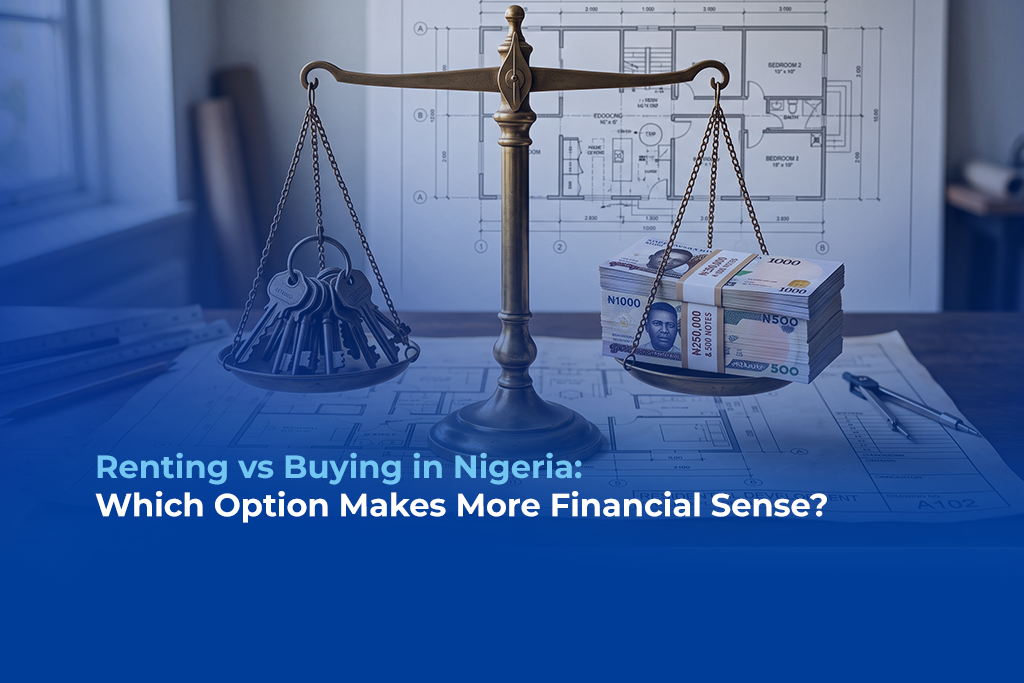
For many Nigerians, the question is simple: Should I continue renting or should I buy my own property?
With rising rental costs, increasing property prices, and the changing cost of living, the decision is becoming more important than ever.
Homeownership is often seen as the ultimate financial goal, but buying a property is not automatically the right decision for everyone. Your income, location, long-term plans, available capital, and financial commitments all matter.
So, which option makes more sense?
The Case for Renting
Renting provides flexibility.
For young professionals, families who may relocate, or people still deciding where they want to settle, renting can make sense because it requires less long-term commitment.
Some advantages include:
- Lower upfront financial commitment compared with purchasing a property.
- Greater flexibility to relocate.
- Access to locations that may currently be too expensive to buy in.
- Less responsibility for major structural repairs and certain property-related costs.
- The ability to keep more of your money available for other investments or business opportunities.
However, renting also comes with a major disadvantage: you are paying for accommodation without building ownership of the property.
Over several years, rent payments can become a significant financial commitment.
The Case for Buying
Buying property turns your housing expense into an asset-building strategy.
When you purchase a property, you are not simply paying for somewhere to live. You are acquiring an asset that may appreciate in value over time, depending on factors such as location, infrastructure, demand, development and the condition of the property.
Homeownership can provide:
- Long-term asset ownership.
- Potential capital appreciation.
- Greater control over your living space.
- Potential rental income if the property is eventually leased.
- A valuable asset that can form part of your family’s long-term financial plan.
For investors, property can also serve as a way to diversify beyond traditional financial assets.
But Buying Property Comes With Responsibilities
Owning a property does not mean there are no additional costs.
Buyers need to consider expenses such as:
- Legal and documentation costs.
- Development and service charges where applicable.
- Maintenance and repairs.
- Property taxes and statutory charges.
- Insurance.
- Renovation or furnishing costs.
- Infrastructure and estate management expenses.
This is why buying property should be approached as a financial decision rather than simply an emotional one.
So, Which One Should You Choose?
There is no universal answer.
If you are still building your career, frequently relocate, or do not yet have enough financial stability for a property purchase, renting may be the more practical option.
If you have stable income, have identified a location where you want to settle, and can comfortably manage the financial commitment, buying may provide greater long-term value.
The important thing is to avoid making the decision simply because everyone around you is buying property.
Think Beyond the Monthly Payment
One of the biggest mistakes people make is comparing rent with a property’s purchase price alone.
A smarter approach is to consider the total cost of ownership.
Ask yourself:
- How much would I spend on rent over the next 5–10 years?
- How much capital would I need to purchase?
- What additional costs come with ownership?
- Could the property appreciate?
- Could it generate rental income?
- Is the location likely to experience further development?
- Can I comfortably afford the property without putting unnecessary pressure on my finances?
These questions give you a much clearer picture.
Location Still Matters
Whether you are renting or buying, location remains one of the most important factors in Nigerian real estate.
A property close to employment centres, good roads, commercial areas, schools, healthcare facilities and other essential infrastructure may offer greater convenience and potentially stronger demand.
This is one reason planned communities and properly developed estates can be attractive to both homeowners and investors.
The Bigger Picture: Building Towards Ownership
For many Nigerians, renting can be part of the journey toward homeownership rather than the final destination.
The goal should not be to rush into buying a property you cannot comfortably afford.
Instead, build a realistic financial plan.
Save consistently. Understand the market. Research locations. Compare property options. Understand the documentation. And when the right opportunity comes, make an informed decision.
Conclusion
Renting and buying both have their place in Nigeria’s housing market.
The right choice depends on your current financial position, lifestyle, career plans and long-term goals.
But if homeownership is one of your goals, the earlier you begin planning, the better prepared you will be when the right opportunity comes.
At Octo5 Holding Limited, we believe homeownership should be approached with clarity, proper planning and access to the right opportunities. Through innovative housing solutions and thoughtfully planned communities, we continue to work towards making property ownership more achievable for Nigerians.
Your journey to owning a home does not have to start with having everything today. It starts with having a plan.